Beyond Word Counts: How Paragraph Structure Impacts Readability
- Words Counter Tool
- Jun 19
- 5 min read

Paragraph structure shapes readability more than your total word count ever will. It decides how easily people read your page, how well search engines map your ideas, and whether anyone finishes what you wrote. So short, well-spaced paragraphs help readers scan fast, while heavy blocks push them away.
Word Count looks like progress in your editor. Then a real reader opens the page on a phone and hits one giant gray block. That gap between how your draft looks and how it reads is the part most writers miss.
Why Word Count Hides The Real Readability Problem
Hitting a word target feels like the job is done. It is not. A 1,500-word post can still bury its point inside a few brick-sized paragraphs.
So a word counter tells you one useful thing: whether you covered the topic with enough depth. It says nothing about flow. That is why depth alone never makes a page easy to read.
What A Word Counter Actually Measures
A word counter gives you a single number, and that number has limits. It confirms coverage, not comfort.
So treat your word count as a depth check, not a finish line. Then look at structure on top of it. Together, those two views show whether your page reads as well as it looks.
Why A Character Counter Still Has A Job
A character counter feels old-school, yet it earns its spot in tight spaces. Meta titles, descriptions, and social posts all carry hard limits.
So use a character counter when space is strict and a word counter when you check depth. Neither one tells you if your paragraphs flow, but both support cleaner writing around them.
How Paragraph Structure Impacts Readability On Real Screens
People do not read web pages word for word. They scan, and a long block stops that scan cold. So if your paragraphs run ten lines deep, readers bounce before they reach your point.
Paragraph structure fixes that fast. When you give each idea its own short block, the page feels light instead of heavy. That single change keeps people scrolling.
How Short Blocks Improve UX Readability
Short paragraphs give the eyes a place to rest. That small comfort keeps people moving down the page.
So to improve UX readability, hold most blocks to two or three sentences and let white space breathe between them. A paragraph length checker flags the spots that still feel crowded, so you fix them before readers notice.
Why Mobile Screens Punish Long Paragraphs
A block that looks short on a laptop stretches into a tall column on a phone. So mobile changes everything, even when your words stay the same.
That is why you should preview every post on a phone before publishing. If a block looks like a brick, split it. Free web readability tools catch those heavy spots so nothing slips through.

How To Check Paragraph Structure Without Guessing
Editing by feel works on a short post. Once your draft passes 1,000 words, it breaks down, because you stop noticing the heavy blocks you have read ten times.
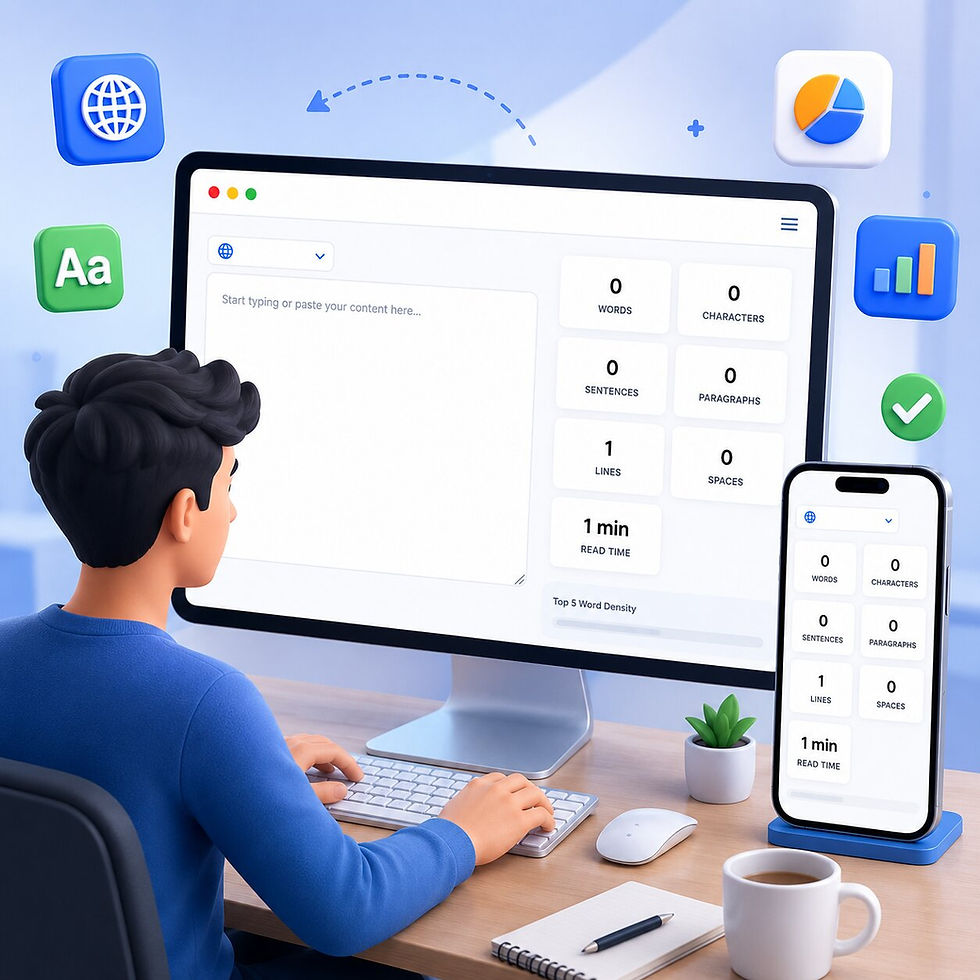
So you need a check that never gets tired. A Paragraph Counter scans your draft and shows how many blocks you wrote, plus where they run long. You get the full shape of your page in seconds.
How To Count Paragraphs The Easy Way
A lot of writers ask how to count paragraphs without scrolling and tallying by hand. The fast answer is to skip the manual work entirely.
So paste your draft into the tool and read the number. Then compare it to your word count. If 1,200 words sit inside seven blocks, your paragraphs run too long, and you split them.
Why A Words Counter Tool Pairs Well With Block Checks
A words counter tool does more than total your draft. It helps you spot the section that runs far longer than the rest.
So when one block holds twice the words of its neighbors, you know exactly where to cut. Pair that with a paragraph length checker, and you see depth and balance in one view.
How Paragraph Structure Connects To SEO And AI Search
Clean structure helps people, and it also helps search engines. Google reads your layout, not just your words, so tidy paragraphs make your page easier to crawl.
A content structure analyzer confirms this by mapping your headings and blocks. When it flags a wall of text, treat that as a warning, because the same wall makes a reader bounce.
How A Content Structure Analyzer Reads Your Page
A content structure analyzer looks at your headings, spacing, and block length the way a machine sees them. So it shows you the gap between what you meant and what you actually built.
That view matters more than it sounds. When the structure stays clean, search engines match your page to the right questions faster.
Why GEO Rewards Short, Clear Blocks
Search is not only blue links anymore. AI answers from tools like ChatGPT and Google pull short, self-contained sentences straight off your page. So tangled blocks get skipped, while tight paragraphs get quoted.
That is the reason clean structure now wins twice. People scan it fast, and AI engines grab it cleanly.
How To Put Better Paragraph Structure Into Practice
Knowing the why means nothing if you never act on it. So here is the simple workflow you can copy on your next post.
First, write your draft without worrying about structure. Next, run a paragraph counter tool and a word counter together, so you see balance and depth at once. After that, break any paragraph longer than four sentences.
Common Structure Mistakes And Quick Fixes
The biggest mistake is stuffing several ideas into one block. Each idea deserves its own paragraph, so split them apart and let the page open up.
Another slip is making every paragraph the same length. That feels robotic, so mix short blocks with slightly longer ones. A quick pass with web readability tools catches both problems before your readers do.
Conclusion
Word count had its moment, but paragraph structure does the real work. Short, balanced blocks keep readers scrolling, help search engines map your ideas, and give AI tools clean lines to quote. That is what separates content people finish from content they skip.
So before you publish, run one quick check. Use a word counter for depth, a paragraph counter tool to balance your blocks, and a content structure analyzer to test the layout. Those few minutes turn a heavy draft into a page that reads with ease.
Frequently Asked Questions
Why Does Paragraph Structure Matter More Than Word Count?
Word count measures depth, while paragraph structure measures flow. Readers stay when blocks stay short, so structure shapes readability far more than length.
How Do I Count Paragraphs In My Article?
Paste your draft into a paragraph counter tool. It gives you the total in one click, which beats scrolling and counting by hand.
What Is The Best Paragraph Length For Readability?
Two to four sentences works best. Keep most blocks under 60 words so readers and search engines can scan your page quickly.
Which Tools Help Improve UX Readability?
A paragraph length checker, a content structure analyzer, and free web readability tools all help. They flag heavy blocks before they cost you traffic.
Do Word Counters Still Matter For Readability?
Yes. A word counter checks topic depth, and a character counter keeps meta titles and descriptions inside their limits while you tighten your blocks.


Comments