Character Count for Coding: Checking String Lengths
- Words Counter Tool
- Jun 17
- 4 min read

A character count tells coders exactly how long a string is by showing how many letters, numbers, spaces, and symbols it holds. Many code rules set strict string limits, like a password field that caps at 20 characters, so a Character Counter keeps your strings inside those bounds. In short, it helps you write clean code that runs without length errors.
Now, let me explain why this simple check saves you from a lot of bugs.
Why Character Count Matters For Coding
Code breaks when strings get too long or too short. A database field might allow only 255 characters, and a username box might want at least three. So if your string slips past those rules, your program throws an error.
That is where a character count helps. It shows your total length right away, which makes it easy to spot problems. Instead of guessing, you get a clear number. As a result, you fix length issues before they ever reach your users.
Also, clean strings make debugging faster. When you know the exact character count, you waste less time hunting for the broken line.
How A Character Counter Catches String Bugs
Strings cause more trouble than people think. An extra space, a hidden symbol, or one missing letter can crash a function. Therefore, a character counter gives you a fast way to compare what you expect against what you actually have.
Because the number updates live, you test with confidence. You paste a string, the count appears, and you instantly know if it fits the rule you set.
What Common String Limits Look Like In Code
There is no single magic number, but many fields share common limits. A tweet once capped at 280 characters, while a short URL slug might stay under 60. Meanwhile, a text message often splits after 160 characters.
So before you ship a feature, run your string through a character counter. Then compare your character count to the limit your code expects. If you go over, it is time to trim or adjust.
Using A Word Count Checker To Test Inputs
First, paste your sample string into any word count checker. Next, look at both the word count and the character count. After that, ask if the value fits your field rules. Often, you will catch a string that is one or two characters too long.
Because the tool shows the number as you edit, testing feels quick. You trim a space, the count drops, and you instantly know the input now passes.

How A Word Counter Helps With Code Comments And Docs
Sometimes you do not just check strings inside the code. You also write comments, README files, and docs that need to stay clear. So a Words Counter Tool becomes very handy here too.
For example, a commit message often reads best under 50 characters in the title line. A short doc summary might aim for a tight word count. In these cases, a word counters tool keeps your writing neat and easy to scan.
When To Count Characters Instead Of Words
API keys, tokens, and IDs all live by exact length, not by word totals. Therefore, a characters counter saves you time and stress. You simply paste the value, and the tool shows your character count right away.
So whenever a system rejects your input for being too long, a fast way to count characters helps you fix it on the spot.
Easy Tips To Manage String Lengths With A Character Counter
Checking lengths feels slow at first. But with a few simple habits, it gets much easier.
Start by setting clear limits in your head before you code. If a field allows 100 characters, keep that number close while you test. This habit helps you catch overflows early instead of later.
Next, trim hidden whitespace. Extra spaces at the start or end of a string add to your character count without adding value. A quick check with a wordcounter shows you the true length and saves you from sneaky bugs.
Test One String At A Time
Rather than checking your whole file at once, work string by string. Tackle your form inputs first, then your error messages, and finally your labels. After each check, recheck the character count to track your progress.
Because you test in small steps, the job feels lighter. Plus, you catch more length problems this way.
Why Online Word Counters Beat Counting By Hand
You could count characters by hand, but honestly, who has time for that. A free wordcounter does it in a second, and it never miscounts.
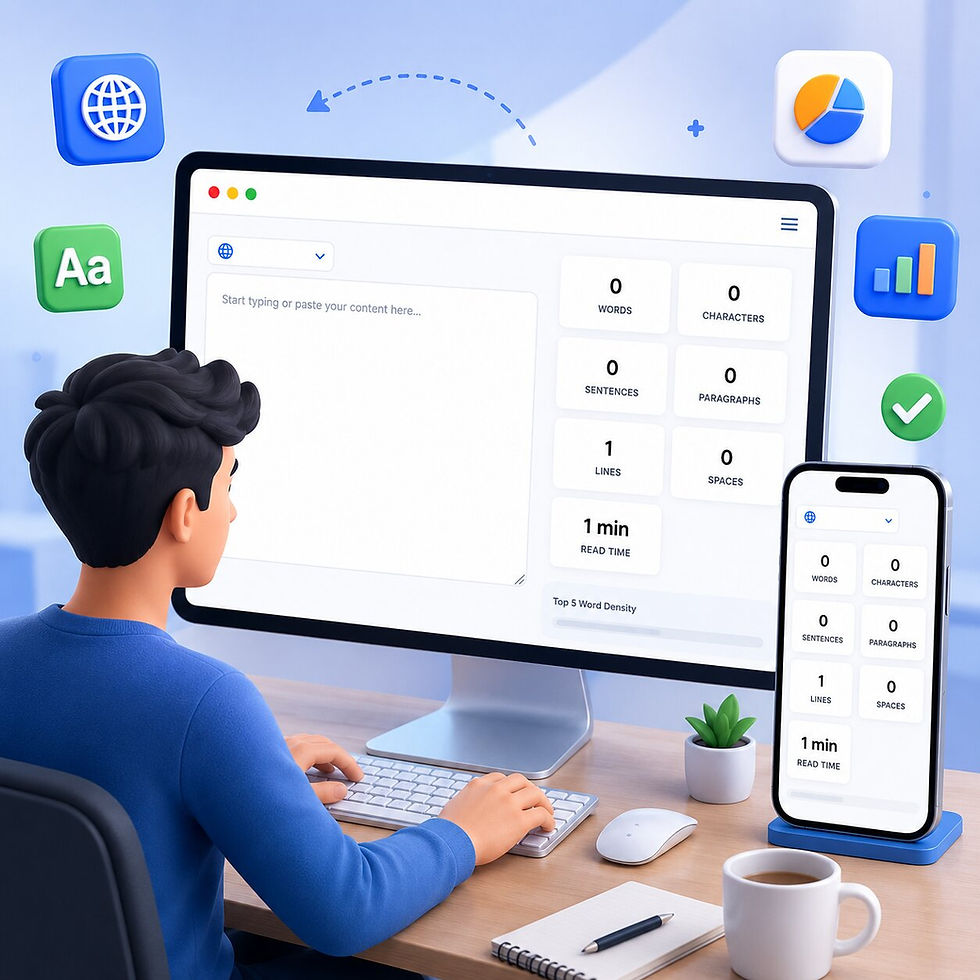
Moreover, most word counters show extra details. You get word count, character count, line totals, paragraph counter results, and even reading time in one view. So you understand your text far better with almost no effort.
Pick A Simple Words Counter Tool
You do not need anything fancy. A clean words counter tool that shows totals clearly works great. Look for one that updates as you type, so you can test in real time.
In the end, the best tool is the one you actually use. A simple words counter that lets you count characters and words quickly will help on every project.
Conclusion
Good code respects every limit, and a character count makes that easy to honor. It shows your character count and word count instantly, so you can keep each string inside its rule and skip painful bugs. As a result, your program runs cleaner and your debugging gets faster. So next time you handle a tricky string, run it through a word count checker first. That one small step can help every line of your code fit just right.
Frequently Asked Questions
How does a character count help in coding?
It shows the exact length of a string, so you can keep inputs inside field limits and avoid length errors.
Can a character counter check string length fast?
Yes. A character counter shows your character count the moment you paste text, with no manual counting at all.
Why do string limits matter in code?
Many fields set strict caps, so checking your character count keeps strings from breaking forms, databases, or functions.
Does a word counter help with code comments?
Yes. A word counter keeps commit messages and docs tight, which makes your notes easier for teammates to read.
Why use a word count checker while testing inputs?
A word count checker shows your totals live, so you can trim extra characters and confirm each input passes its rule.


Comments