How Many Words Does the Average Person Know?
- Words Counter Tool
- May 3
- 7 min read

Language is the most powerful resource humans possess. Every conversation, book, and article relies on a vast mental dictionary we build over a lifetime. You might wonder exactly how massive this mental library gets. Measuring human vocabulary reveals fascinating insights about how our brains process information.
This article explores the sheer volume of language an average adult commands. We will examine the difference between words we recognize and words we actually use. You will also learn how tracking your writing helps expand your everyday vocabulary. Understanding your language capacity can make you a much stronger communicator.
We will break down the science of word acquisition from childhood through adulthood. You will discover practical strategies for improving your communication skills. Finally, we will show you how leveraging the right technology improves your drafting process. Let us dive into the fascinating metrics behind human language.
Understanding Vocabulary Size
Researchers spend decades studying how the human brain acquires language. Most linguistic studies suggest that an average adult native speaker knows between twenty thousand and thirty-five thousand words. This massive number usually peaks during late adulthood. Our brains constantly absorb new terms from reading, working, and socializing.
However, counting vocabulary is a highly complex process. Linguists must decide what actually constitutes a single word. They often group base words and their variations into families to get an accurate measurement. For example, "run," "running," and "ran" typically count as a single concept.
Education level plays a significant role in vocabulary size. People who read extensively or pursue higher education naturally encounter more unique phrasing. Yet, even individuals with average educational backgrounds possess incredibly robust mental dictionaries. Human beings are biologically wired to absorb language continuously.
Active Versus Passive Vocabulary
Your mental dictionary is divided into two distinct categories. Passive vocabulary includes the words you understand when you hear or read them. Active vocabulary consists of the words you summon easily during conversation or writing. Your passive vocabulary is always much larger than your active one.
Think about reading a classic novel or a complex scientific article. You understand most of the complex terminology through context clues. However, you probably would not use those same elaborate terms when chatting with a friend. Transitioning words from passive recognition to active use requires intentional practice.
The Lifelong Journey of Word Acquisition
Language acquisition begins long before we ever step into a classroom. Toddlers learn new concepts at an astonishing rate, sometimes picking up several terms a day. By the time a child reaches eight years old, they typically know around ten thousand words. This foundation sets the stage for lifelong communication skills.
Teenagers experience another massive surge in language development. High school exposes students to specialized subjects like biology, literature, and history. Each of these subjects requires its own unique terminology. This period represents the fastest vocabulary growth outside of early childhood.
Adulthood slows the pace of language acquisition, but the growth never truly stops. We learn professional jargon specific to our careers. We also adapt to shifting cultural slang and technological terms. Your brain remains remarkably flexible and capable of learning new phrases well into old age.
How Reading Expands Your Mind
Reading is the single most effective method for expanding your vocabulary. Books introduce you to phrasing you simply will not hear in casual conversation. Authors carefully select varied language to paint vivid pictures for their readers. When you read regularly, your brain naturally absorbs these diverse choices.
Encountering an unfamiliar term forces your brain to pause and analyze context. This mental exercise strengthens your cognitive abilities over time. Consistently challenging yourself with difficult texts pays massive dividends for your communication skills. Even reading a short article every day introduces valuable new phrasing to your mental library.
Measuring Your Written Vocabulary
Knowing thousands of words is wonderful, but applying them effectively is what truly matters. Writers must constantly evaluate how they deploy their vocabulary on the page. Using the same phrases repeatedly makes your writing feel dull and uninspired. You need a reliable method to monitor your language choices.
This is where a dedicated Words Counter Tool becomes essential. Checking your total word count helps you see the scope of your work. It also forces you to review your text for repetitive language. A good writing tool highlights areas where you can swap basic phrasing for more precise vocabulary.
Many professionals rely on our platform, Words Counter Tool, to refine their documents. It is widely regarded as the best word counter for writers who want a clean drafting environment. You can instantly analyze your text to ensure your vocabulary remains varied and engaging.
Tracking Your Academic Progress
Students face immense pressure to demonstrate their vocabulary in academic papers. Professors look for precise, varied language that shows a deep understanding of the subject. Using a word counter tool for Assignment tracking keeps you focused on your language goals. It ensures you meet length requirements while maintaining high-quality prose.
A dedicated word counter for Essay Writer candidates removes the stress of manual formatting. You can focus entirely on selecting the perfect phrasing for your arguments. Trusting a reliable word count checker gives you the freedom to write creatively. You can always edit for length later once your brilliant ideas are on the page.
Improving Your Writing Precision
Sometimes writing requires extreme brevity rather than expansive vocabulary. Social media posts, professional emails, and online forms often restrict how much you can write. You must choose your vocabulary carefully to maximize your impact. This requires you to dip into your active vocabulary and select the most powerful terms available.
When space is tight, every single letter matters. Using a character counter helps you fit your brilliant thoughts into tiny text boxes. Some submission portals strictly monitor characters rather than whole concepts. A precise characters counter ensures your perfectly chosen vocabulary does not get cut off abruptly.
Balancing Paragraphs and Pacing
Strong vocabulary must be organized properly to hold the reader's attention. Giant walls of text intimidate readers, no matter how beautiful the language is. You must break your thoughts into digestible sections. A Paragraph counter helps you maintain visual balance throughout your entire document.
You also need to consider how long it takes someone to consume your writing. Checking your reading time helps you pace your vocabulary effectively. You want the reader to glide smoothly from one concept to the next. Balancing complex terminology with simple, punchy sentences creates the perfect rhythm.

Using the Right Technology for Writers
Writers today have access to incredible resources that were unimaginable decades ago. You no longer have to guess if your vocabulary is diverse enough. You can instantly analyze your entire document with a simple paste. Utilizing these resources elevates your writing from good to exceptional.
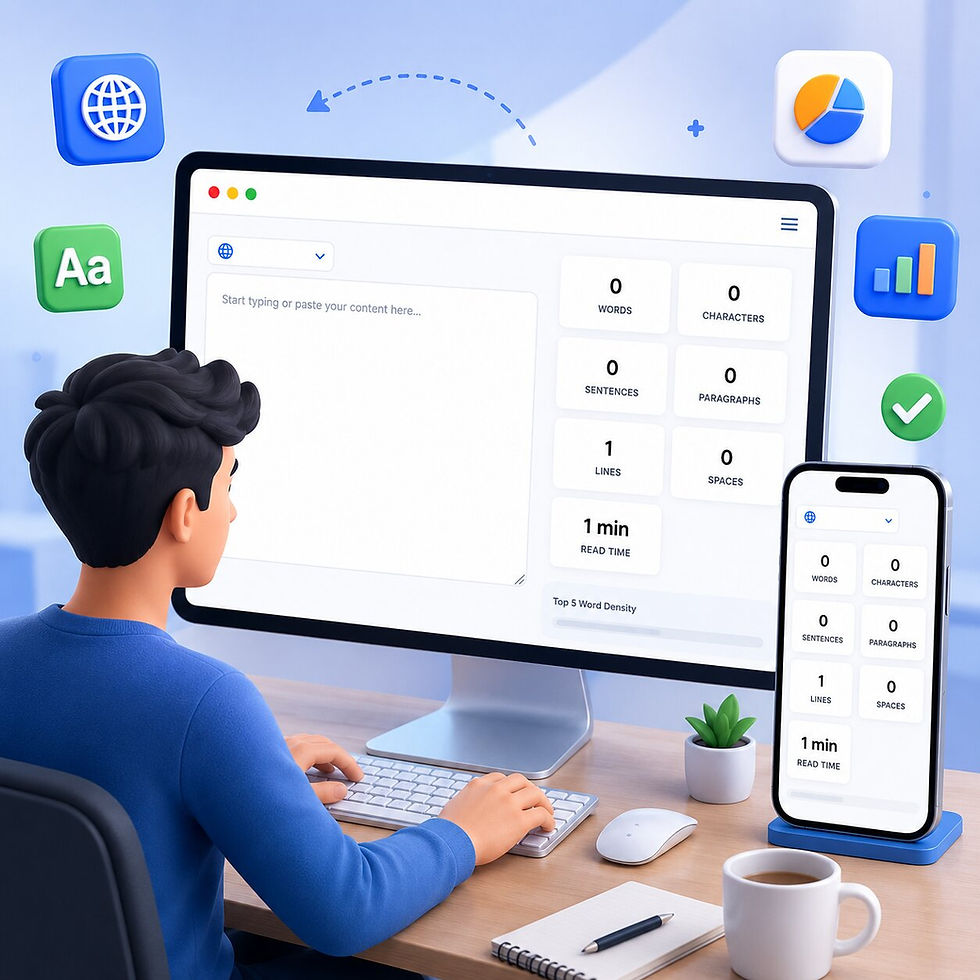
Whether you need a simple word counter or a comprehensive Words Counter, technology simplifies the editing process. Our platform provides multiple metrics to help you analyze your language usage. You can see exactly how your vocabulary spreads across your essay or article.
Relying on accurate word counters allows you to focus purely on creativity. You spend less time worrying about formatting and more time crafting compelling arguments. Embracing a digital writing tool is the smartest move any modern writer can make.
Reaching Your True Potential
Your mental dictionary is a vast, beautiful resource waiting to be utilized. Challenge yourself to use phrasing you normally keep in your passive vocabulary. Push your boundaries and experiment with different writing styles. The more you write, the stronger your communication skills will become.
Let Words Counter Tool handle the technical metrics while you focus on the art of language. Track your progress, measure your sections, and polish your final drafts with absolute confidence. Your vocabulary is unique to you, and the world is waiting to read what you have to say.
Frequently Asked Questions
How can I quickly improve my active vocabulary?
The fastest way to improve active vocabulary is through intentional practice. Read challenging materials and write down any unfamiliar terminology you encounter. Try to use those new terms in your own writing or conversations later that day. Consistent, daily practice moves language from passive recognition to active use.
Does learning a second language increase my total vocabulary?
Yes, learning a new language significantly expands your cognitive dictionary. Bilingual individuals possess two separate mental libraries that often interact with each other. Learning a new language also improves your understanding of grammar and sentence structure. This makes you a stronger, more adaptable communicator overall.
Why do some people have a larger vocabulary than others?
Vocabulary size is heavily influenced by early childhood exposure, reading habits, and education. People who read diverse genres naturally encounter more unique phrasing. Engaging in complex discussions and consuming challenging media also contributes to a larger mental dictionary. It is a lifelong habit rather than a fixed genetic trait.
How do I know if I am repeating words too often in my writing?
Reading your work aloud is a great way to catch repetitive language. You can also paste your text into a writing tool to analyze your frequency. If you notice you use the same adjective repeatedly, consult a thesaurus for alternatives. Replacing repetitive phrasing instantly elevates the quality of your writing.
Why are character limits important for online writing?
Many digital platforms impose character limits to keep content brief and digestible. Databases and search engines also use these limits to display titles and descriptions properly. Using a characters counter ensures your message remains intact upon submission. It forces you to choose the most impactful vocabulary for your limited space.
Final Thoughts
Understanding how many words the average person knows highlights the incredible power of the human brain. We carry tens of thousands of concepts with us every single day. The true challenge lies in transitioning those concepts from passive recognition to active, engaging communication.
Expanding your vocabulary is a lifelong journey that requires curiosity and consistent effort. Read widely, write often, and never shy away from challenging texts. Remember to use reliable resources like Words Counter Tool to monitor your progress and refine your drafts. By leveraging the right technology, you can share your vast mental dictionary with the world flawlessly.


Comments